
Renault and bio-inspiration from nature
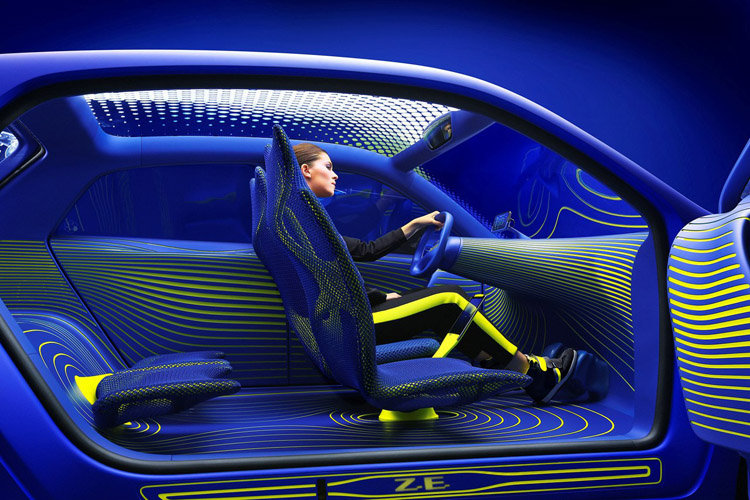
At last spring's 2013 Triennale di Milano, Renault revealed its plans to explore and set the company's future strategic direction, with a focus on examining the natural world. Emerging from the union between the French manufacturer and the industrial design studio headed by Welshman Ross Lovegrove (the biomimicry guru) is a method of rethinking the language of design that aims to create awareness and understanding around the environmental impact of design within the context of urban transport.
The concept is based on an unconventional aesthetic approach that plays with different colours, textures, materials and shapes that represent and imitate nature. These methods have led to surfaces with the ability to transform into actions and change reality or the environment, as seen in the car bodywork that behaves like a type of screen onto which computer-generated images can be projected to examine the visual effect of textures.
Twin'z is the latest concept car in the programme and it demonstrates the company's new design strategy; inspiration for the vehicle was drawn from the first Twingo and the Renault 5, and the car takes passengers on a journey through time.
The blue iridescent body features green LED lights, a dotted grille that maximises the passage of air through the cabin and headlight frames that imitate the iris of a human eye. The wheels are also unusual; they have integrated rims and specially-designed tyres by Michelin, printed with Alan Turing's mathematical patterns that are found in nature.
In short, the vehicle represents a U-turn away from hard mechanical aesthetics, and is now making way for biological principles that offer softer, more organic looks.